


















A Practical Way to Measure the Skill Gap: The Competency Map
Most companies start competency management with good intentions. HR plans a workshop, managers get invited, everyone's keen at the start. Then the project turns into an academic exercise. Dozens of competencies, elaborate behavioural indicators, endless approval rounds. Months pass. The deck gets finished. Nobody uses it.
Why the project stalls
Building a competency model usually starts like a consultancy report. Every role gets fifteen to twenty competencies. Each one carries five levels of behavioural indicators. The matrix grows until it runs to hundreds of rows and nobody can read it.
The outcome is always the same. Managers won't fill in a forty-line form — and if they do, they mark everything with the same middling score. Employees can't work out which line even applies to them. The project sits in a slide deck and nobody goes back to it.
What's lost isn't just time. Months of work, external consultancy fees, hours of management time all go into it. Once the model goes unused, trust goes with it — the next 'competency project' gets treated with suspicion before it even starts.
- Too much scope: defining dozens of competencies per role means none of them get measured properly.
- A vague scale: five levels full of soft language leave managers guessing.
- No ownership: the model gets built once, never updated, and forgotten within six months.
Building a practical map
A competency map works when it's kept simple. Two decisions are enough: how many critical competencies to track per role, and which level scale to use. Everything else follows from those two calls.
Pick three to five critical competencies per role — the ones that actually drive performance in that job. Everything else is noise. The best source for that shortlist is a short conversation with the two or three strongest performers in the role: 'what actually makes the difference here?' tends to give a sharper answer than a two-day workshop ever would.
Examples by role
- Sales rep: negotiation, product knowledge, relationship management.
- Software engineer: code quality, problem-solving, system design.
- Team leader: coaching, operational planning, decision-making.
Cap the level scale at four steps: Beginner, Developing, Proficient, Expert. Define each level with one concrete, observable behaviour, not a subjective word like 'good' or 'excellent' — something closer to 'handles a complex customer objection without needing a supervisor'.
If you already track technical skills or certifications separately, keep them out of the competency map. The map is for behavioural, role-critical competencies; tool knowledge or certificates can stay tracked on their own through GOCATALOG.
Visible progress for employees
A map that lives in a document doesn't do anything on its own. In GOLXP, every employee sees their own competency profile — which level they're at for each competency, and what's missing to reach the next one, all on a single screen.
Employees don't wait for an annual review to find out where they stand. They open their profile, see the gap, and complete the content recommended to close it. Ready-made courses from GOCATALOG, or bespoke content built through GOFACTORY, are suggested against that exact gap. The level doesn't update automatically once the content is finished — it takes a short sign-off from the manager, but the whole loop takes minutes, not months.
That visibility changes motivation too. Employees find the answer to 'why do I need this course' on their own screen. Progress isn't an abstract score — it's a concrete next step.
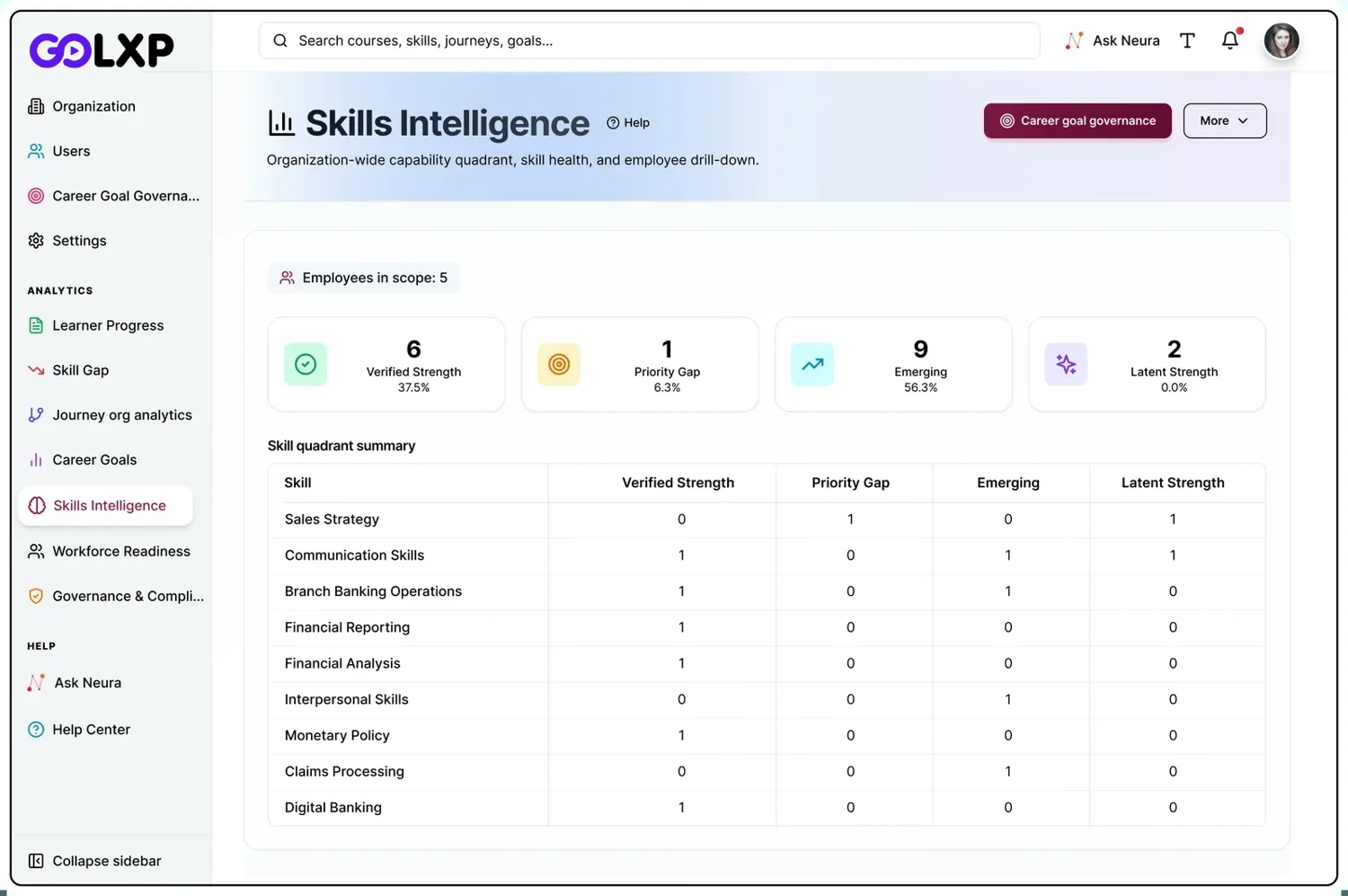
Employees see their own progress on screen, without waiting for a review meeting.
Team-level visibility for managers
For managers, the map answers a different question: where is the skill gap in my team, how deep does it run, and which team member is falling behind on which competency?
In GOLXP's team view, managers see the team average for every critical competency, and who's furthest behind. They don't read through individual reviews one by one — the gap is right there on the map. The trend over time sits on the same screen, so a competency that's slipping, or improving, doesn't need to be guessed at.
- Hiring: know which competency is already strong in the team before opening a role.
- Training budget: prioritise spend against the team's widest gap, not a guess.
- Promotion decisions: see an employee's progress across competencies over time, not just this quarter's performance.
Rolled up across teams, the same map becomes meaningful at the organisation level too. HR can see which competency is weak company-wide and direct training investment there. A competency map doesn't have to be an academic project. Scoped properly, it becomes a visible path for employees and a clear decision tool for managers.