
















LMS or LXP? How to Choose the Right Technology

L&D teams ask the same question on repeat: LMS or LXP? The honest answer is usually "both" — but that doesn't mean doubling your budget. It means being precise about which system owns which job.
LMS and LXP solve different problems. One brings order, the other brings engagement. Treating them as competing options, where picking one rules out the other, is the most common reason organisations end up with the wrong tool for the job in front of them.
LMS and LXP: not the same thing
An LMS manages your organisation's mandatory learning obligations. Assignment, tracking, certification, reporting — that's its job. For HR and compliance teams, it answers a simple, auditable question: who completed what, and when. Everything here is rule, process and record.
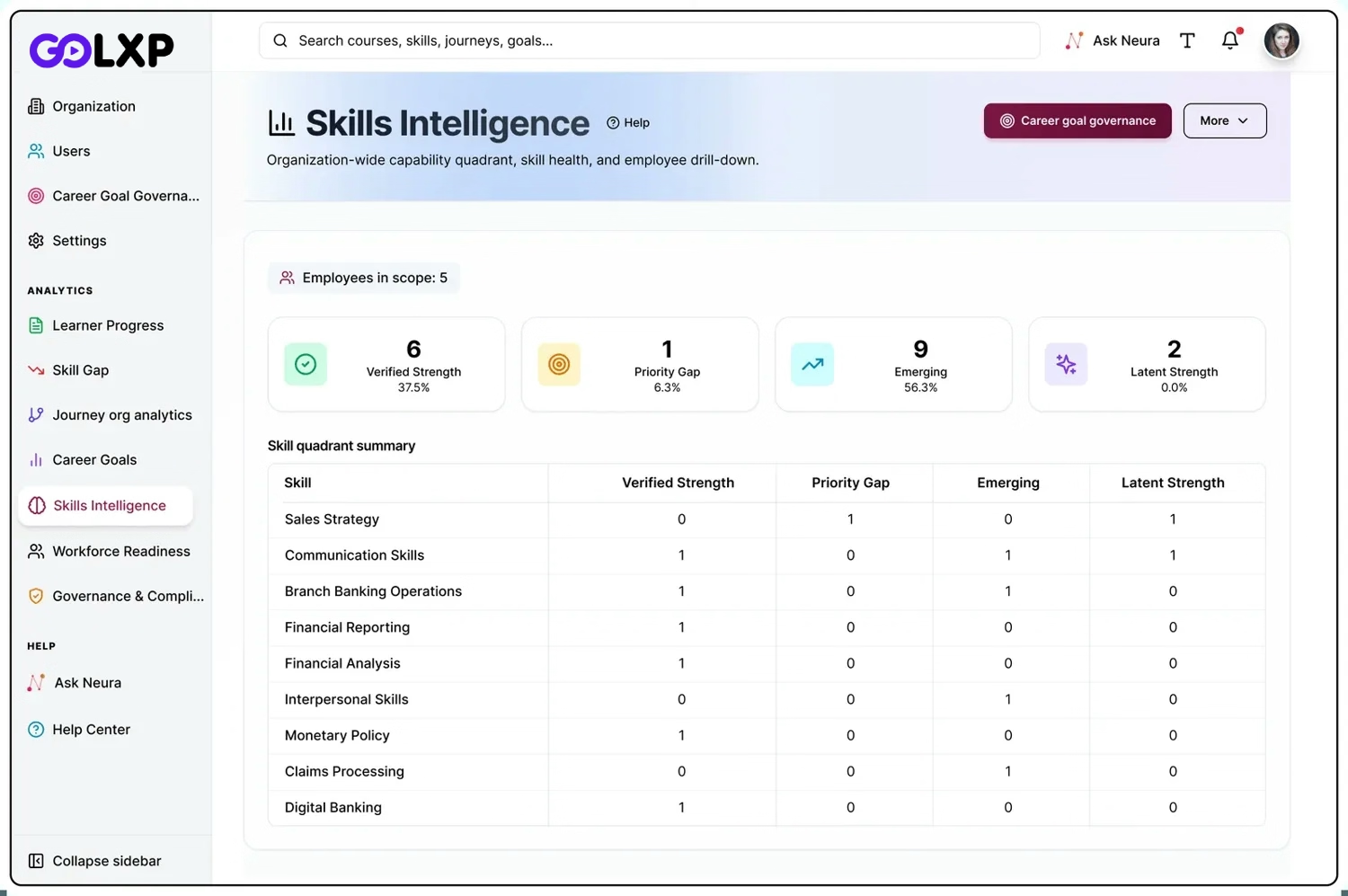
An LXP solves a different problem: helping employees discover learning on their own terms. Think recommended content, search, and personalisation built around interest rather than assigned courses. It's organised around motivation, not obligation — the employee is asking "what's relevant to me", not "what have I been assigned".
The two get confused because, on the surface, both appear to "deliver training content". In practice, the underlying logic is opposite: one runs on obligation, the other on interest. Missing that distinction is what leads either to compliance gaps or to poor engagement.
- An LMS asks: Has this course been completed, by whom, and when?
- An LXP asks: What does this person want to learn right now?
- An LMS measures: completion rate, certificate validity, compliance status.
- An LXP measures: time engaged, return visits, click-through on recommended content.
GOLMS: built for mandatory training
Onboarding, health and safety, GDPR compliance training, role-based certifications — none of that is optional discovery. It's a legal and operational obligation. This is where GOLMS does the heavy lifting.
- Assignment and tracking: automatic course assignment by role, department or location.
- Reporting: audit-ready compliance reports in a single click.
- Certification: expiring certifications are reassigned automatically before they lapse, so nobody falls through the gaps.
The first thing an auditor asks
In a manufacturing business, the completion rate of a safety course is usually the first thing an auditor asks about. At a bank, it's who completed GDPR training and when. Neither question belongs to a discovery experience — it belongs to GOLMS. When the report isn't ready, the risk is a fine; GOLMS is what keeps that risk systematically low.
GOLXP: discovery and personalisation
Real development starts once mandatory training is out of the way. An employee might want to learn about leadership, a new tool, or an industry trend nobody assigned them. That's where GOLXP takes over, turning learning from a task into a choice.
GOLXP recommends content based on an employee's role, behaviour and interests. It brings ready-made courses from GOCATALOG together with bespoke content built in GOFACTORY, inside a single experience. The employee doesn't search — the system suggests, in much the same way a streaming platform surfaces what's next.
Example: a sales team
Ahead of a product launch, a sales rep might need content on competitor positioning. GOLXP can surface exactly that, based on what the rep has engaged with before, without anyone assigning it. The system spots the need before it's voiced — and that difference shows up directly in engagement and retention.
Mandatory training gets employees into the system. A discovery experience is what keeps them there.
When you need both together
Small teams working with a tight budget can often get by on GOLMS alone. Compliance obligations get met, onboarding runs smoothly. But as an organisation grows, learning culture stops being something you can measure by completion rate alone.
In organisations with 500-plus employees, multiple sites, or fast headcount growth, the two work together: GOLMS carries compliance and obligation, while GOLXP drives voluntary engagement and retention. Content built with GOTOOLS becomes usable across both systems, so one piece of content serves two different purposes.
In practice, this shows up within a single employee's journey. A new hire first completes mandatory onboarding through GOLMS, then GOLXP meets them with development content matched to their role. The systems run separately, but the experience feels like one continuous journey.
The right question was never "LMS or LXP". It's which need each system solves — and the answer is usually the right mix of both, in a ratio shaped as much by the maturity of your learning culture as by headcount.