















How AI Is Changing the Work of L&D Teams
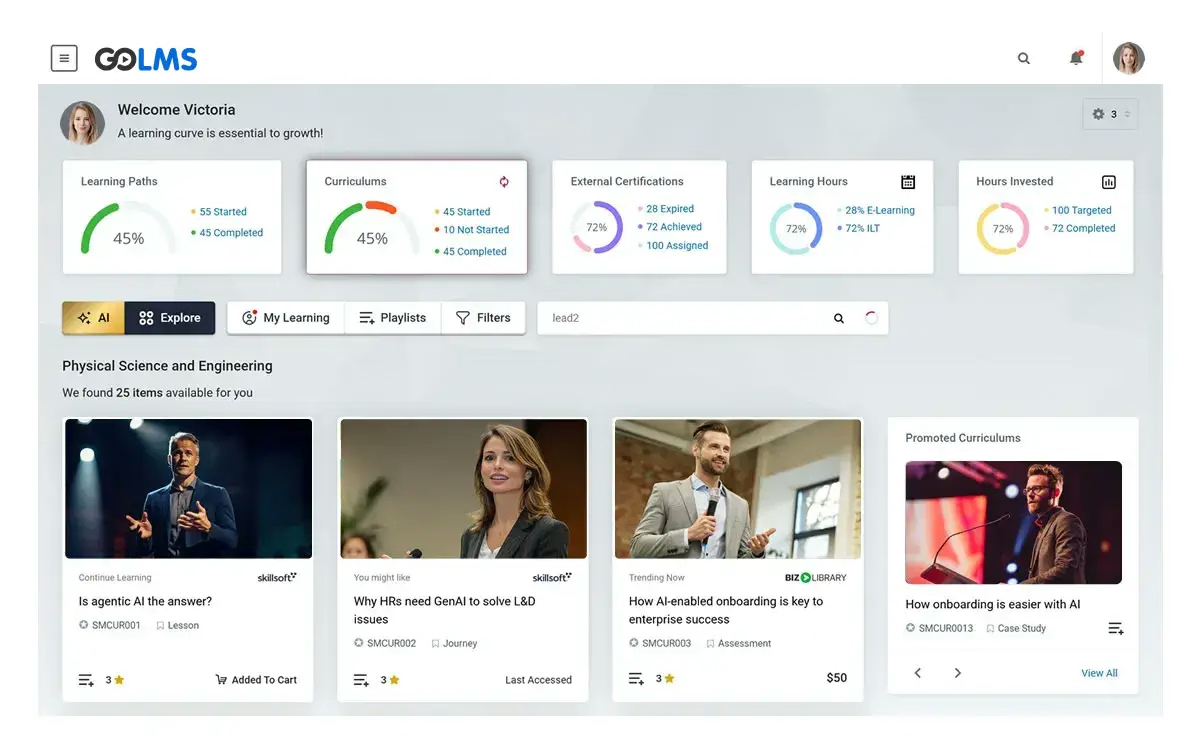
Conversations about AI in corporate learning have moved on from hype. The real question for L&D teams today isn't whether AI will take over. It's which parts of the job are changing, and which aren't.
Here's the honest answer: AI isn't replacing L&D. It's taking over the repetitive, time-consuming tasks so the team can spend more time on the work that actually needs a human. This piece looks at where that shift is real, where it stops, and how GOLXP's recommendation engine and the AI-assisted steps in GOTOOLS and GOFACTORY fit into the picture.
The distinction sounds tidy on paper. In practice, a designer might spend the morning generating a question bank, then the afternoon negotiating a module's priority with a department head. Both are part of the job. They are not worth the same amount.
What AI takes off your plate
Look at a typical L&D team's week and most of it is operational: drafting content, writing quiz questions, translating existing material into another language, converting formats. None of this is unimportant. It just isn't strategic. Done well, it eats hours. Done badly, nobody notices until it's too late.
This is exactly where AI earns its place. It produces a first draft in seconds, expands a question bank, gives translation a starting point instead of a blank page. The team stops starting from zero and starts from a first pass that only needs editing. That difference saves days, not minutes.
What AI doesn't take over is just as clear. Deciding why a course matters to the business, choosing which department gets trained first, working through a manager's objection — none of that is an automation step. Those calls come from context, not from data.
AI in content production
In GOTOOLS and GOFACTORY, AI sits at the start of the content pipeline, not the end. Script drafts, question banks, subtitle text — these get an AI-assisted first pass. A learning designer then reviews the output, adjusts it for tone and learning objective, and signs it off.
In GOTOOLS' authoring tools, this step is easy to see in practice. Rather than opening a blank page, a designer sets the topic and the target audience, and the system proposes a first draft. The designer's job shifts from writing to editing and judgement — shaping it to the organisation's voice, not producing every sentence from scratch.
- Content drafts: give it a topic and a learning objective, and a first draft is ready in minutes.
- Quiz generation: questions and answer options are suggested from existing content; the designer picks and edits.
- Translation: multilingual organisations get an AI-translated starting point, then a language specialist finishes it.
- Format conversion: the same content is reshaped into video, text or microlearning formats faster.
The pattern holds across all of it: AI produces, a person approves. Nothing goes live without sign-off. Quality control stays exactly where it was. Only the speed changes.
Personalisation and recommendation engines
As routine workload drops, personalisation scales up. No L&D team can hand-pick content recommendations for hundreds of employees. Factoring in someone's role, what they've already completed, and their department's goals, all at once, for every individual, is beyond what a human team can manage by hand.
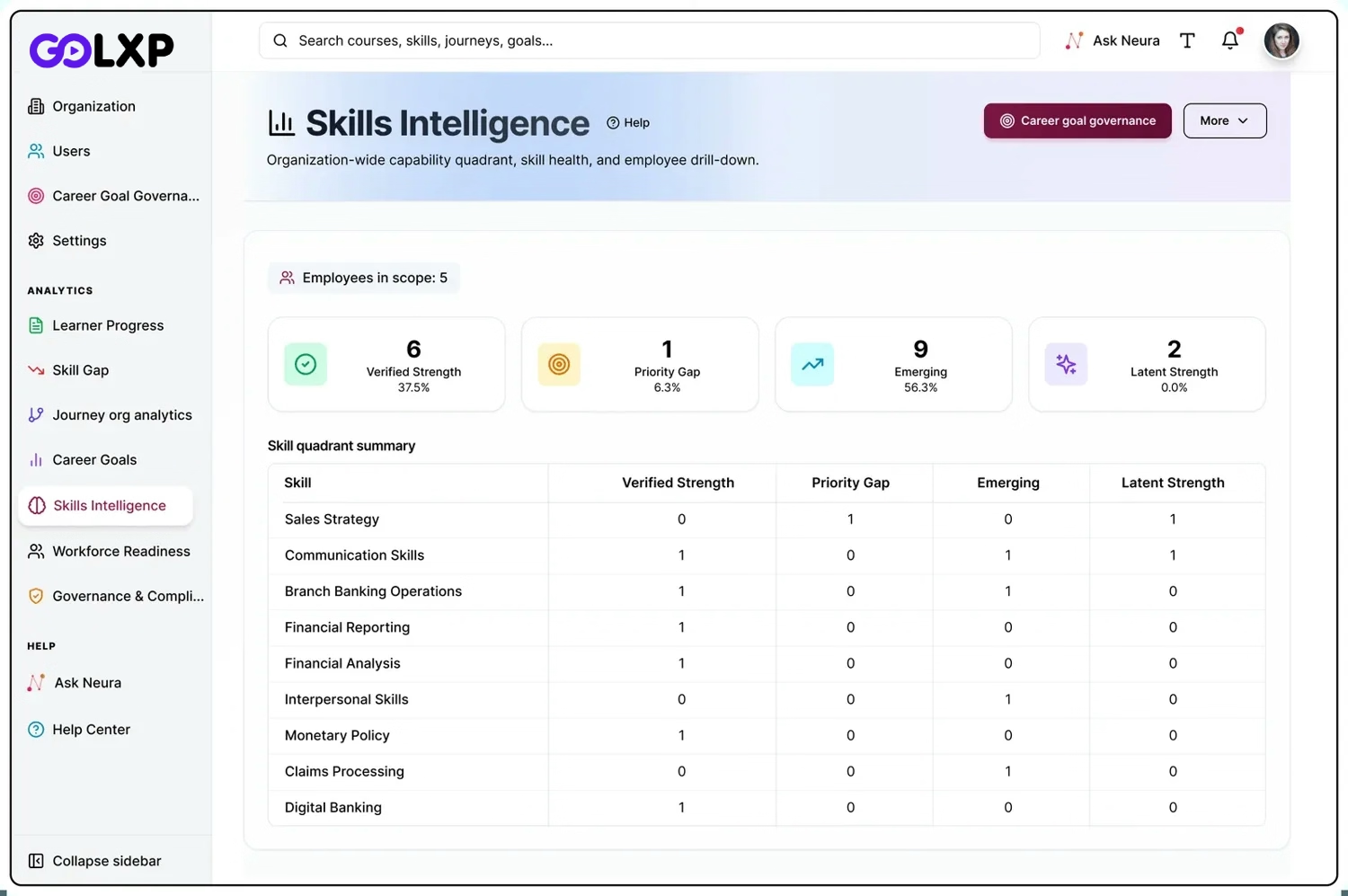
This is where GOLXP's recommendation engine comes in. It connects an employee's role, their learning history and the organisation's goals, then surfaces content suited to that individual's path. A single training plan for everyone gives way to a learning flow shaped by role and actual need.
In practice, the difference is visible from day one. A new sales hire sees onboarding and product content first. Someone in the same role for three years isn't shown courses they've already completed — the system points them at the next skills gap based on performance data instead, updated automatically for every employee.
What the recommendation engine doesn't do
It doesn't set the learning objective. It doesn't decide organisational priorities. Those decisions stay with the L&D team. What the engine does is apply those decisions at scale, for every employee, without the manual effort.
Where L&D teams add value now
The time freed up by less operational work doesn't scatter randomly. In practice, it concentrates in three areas: needs analysis, stakeholder management, and measurement design.
- Needs analysis: working out which team has which skills gap through conversation and observation — something AI can't generate on its own.
- Stakeholder management: aligning training priorities with department heads, managing budget and timeline expectations.
- Measurement design: choosing the right metric to show training's effect on business outcomes, and reporting it.
AI can produce content. Deciding which content is worth producing is still a human call.
These three areas are where AI still falls short, because they call for judgement, relationships and reading context, not data processing. Completion and performance data flowing through GOLMS gives that judgement a foundation. But the decision still sits with the L&D team.
That's not a smaller role for the team — it's a more valuable one. Freed from operational load, an L&D team can put real time into measurement design. It can report the effect on business outcomes, not just a completion rate. That changes how the training budget is seen across the business.
The upshot: AI doesn't shrink the L&D team. It shifts the centre of gravity from operations to strategy. For teams that want to manage that shift well, GOLXP and the AI-assisted steps in GOTOOLS and GOFACTORY are built to support it, without overselling what AI can do.