

















AI in Customer Education: A Connected Ecosystem
Picture a SaaS company with three types of customer using the same product: an administrator managing the enterprise account, a reseller's field rep, and an end user who logs in once a week. All three get sent the same "Getting Started" course. The result is predictable — one is bored, one is overwhelmed, one never finishes it.
One course fits no one
Customer education tends to follow the same pattern everywhere. One onboarding course, one set of videos, sent to every customer in the same order. The logic seems sound: build the content once, reuse it forever. But no customer base is actually uniform.
- Usage level: a first-week user and a two-year veteran need different things from the same product.
- Role: someone configuring the admin panel follows a different path from someone doing routine tasks.
- Channel: if the product sells through a reseller network, partner training has to be distinct from end-user training.
- Language and region: a single-language course always leaves part of a multi-market customer base behind.
Ignore that difference and the outcome is predictable. Completion rates drop, the same support questions keep repeating, and customers never discover most of what the product can do. The content already exists — it just never reaches the right person.
What AI actually scales
There's an important distinction here. AI's role in customer education isn't producing more content. It's routing the content you already have to the right person at the right moment.
When a customer logs in, the system reads the signals available to it: which features they use, which they've never opened, when they were last active, what they've contacted support about. Those signals decide which training module matters most to that customer right now.
How the signals work together
- Behavioural data: which modules were completed, which screens were never opened.
- Timing: when they last logged in, whether usage is trailing off.
- Support history: what they keep asking about.
- Segment data: their role, plan, and contract scope.
None of these signals means much on its own. AI's job is to combine them into a concrete answer to one question: which module should this customer see right now.
The naive fix would be writing a separate course for every segment. That grows the content team, multiplies the maintenance burden, and turns every product update into dozens of versions to rewrite. AI-driven routing avoids that trap entirely — the content stays single-sourced, only the delivery is personalised.
Scale doesn't come from producing more content. It comes from distributing what you already have, intelligently.
GOLMS and GOCATALOG in practice
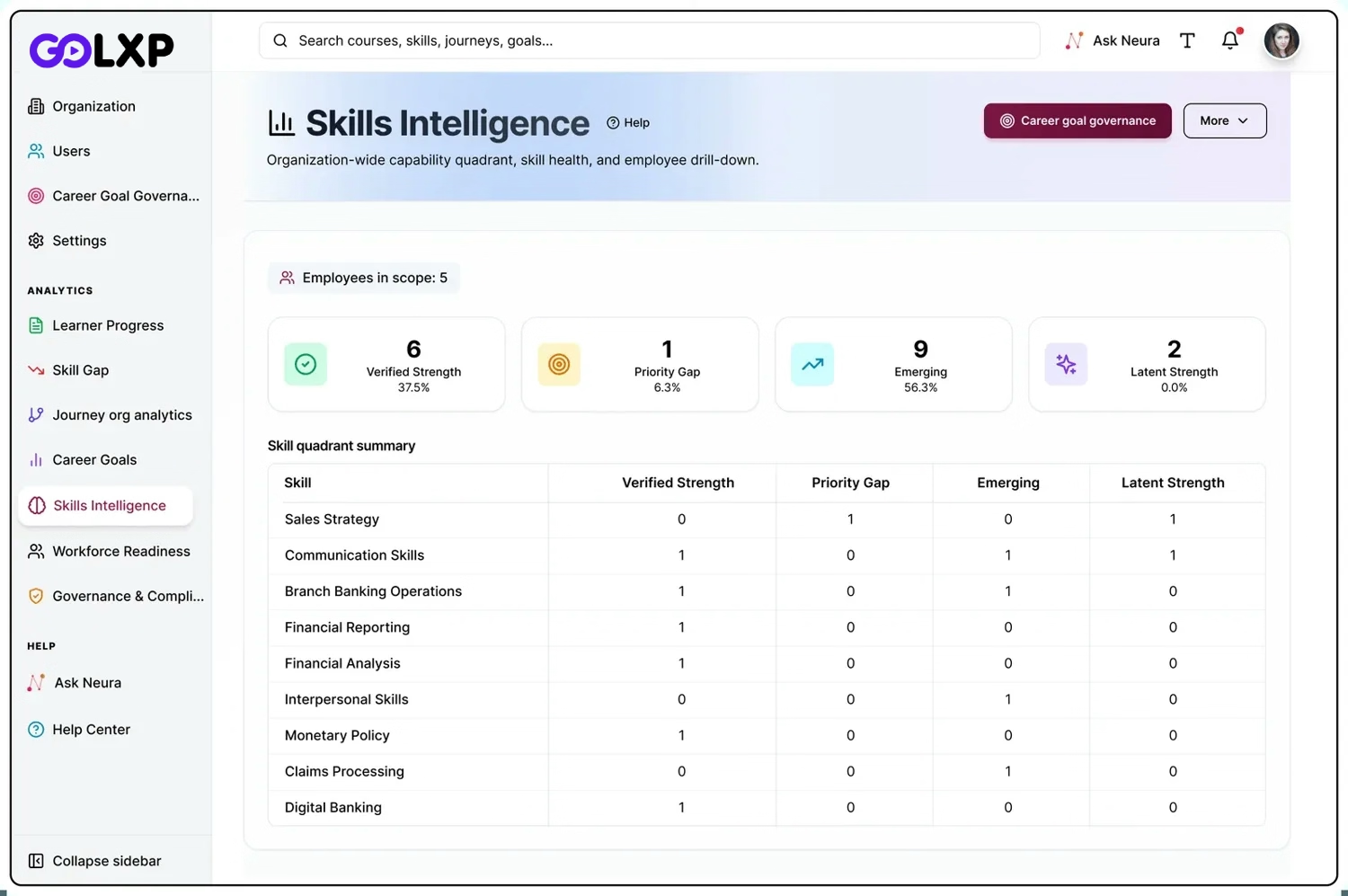
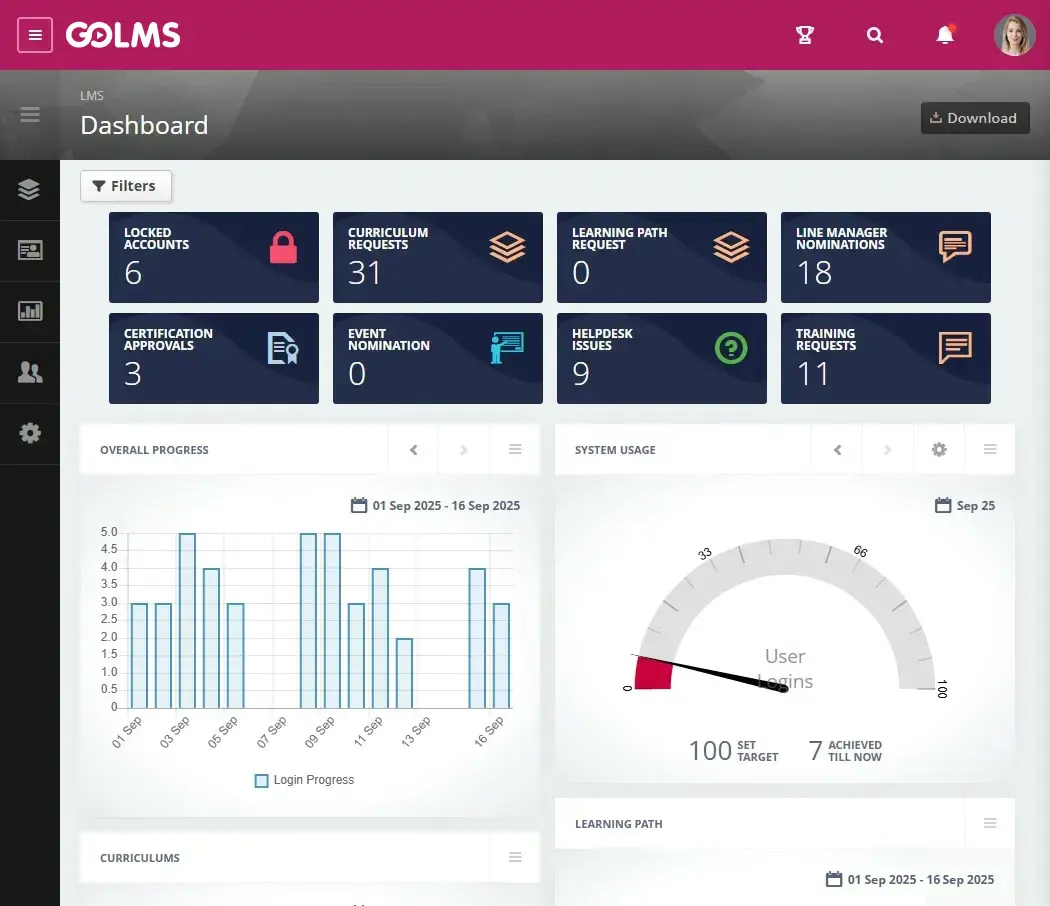
Inside the Respongo ecosystem, this plays out across two products. GOLMS holds the progress data, role, and usage history behind every customer account. GOCATALOG matches that data against its library of ready-made content.
Three common scenarios
- Partner training: for the same product, resellers see sales and installation modules while end users see day-to-day usage ones.
- Staged onboarding: a new customer starts with the fundamentals; advanced content surfaces automatically once usage picks up.
- Dormant feature detection: a customer who's never opened a feature gets a short module on it moved to the top of their list.
- Multi-market accounts: the same library gets recommended in the right language and regional version for each customer.
GOCATALOG's ready-made library is what makes this workable. The team isn't building content from scratch for every scenario — it's surfacing existing modules in the right order to the right customer. When there's a genuine gap in the library, GOFACTORY produces the missing piece. That's the exception, not the rule.
That reshapes what the customer education team actually spends its time on. The question stops being "what do we send everyone" and becomes "how do we grow the library" — routing is handled by the system.
Three steps to start
Scaling customer education this way can sound like a major overhaul. In practice, it starts with three steps.
- 1. Define your segments: split your customer base by role, usage level, and channel. AI can't route what hasn't been separated.
- 2. Consolidate the library: scattered PDFs, videos, and courses need to sit in one system before a recommendation engine can reach them.
- 3. Decide which signals matter: login frequency, completed modules, support tickets — choose what should trigger a recommendation.
Finishing those three steps isn't the end of the work, it's the start. Watch which segments complete which modules and where they drop off. If one module keeps getting skipped, the problem might not be the content itself — it might be who it's being recommended to.
The real difference in customer education doesn't come from who produced the most content. It comes from who got the right content to the right customer at the right moment.