


















E-Learning in 2026: From Content to a Learning Ecosystem
For years, corporate training followed a familiar cycle: a need emerged, a course was produced to meet it, the course was published, and completion rates were reported. The cycle worked — because needs changed slowly.
Today the picture is different. Roles change quickly, skills become outdated faster, and employees want access to knowledge the moment they need it. In these conditions, producing standalone training means falling behind rather than closing the gap.
The Limits of Standalone Training
Individually produced courses have three structural problems:
- Fragmented context: Each course makes sense on its own, but where it fits in the employee's development journey is unclear.
- Hard to measure: It produces no data beyond completion rates, making it impossible to link to skill development.
- High maintenance: Every change requires recreating the content, keeping the L&D team stuck in a production loop.
The problem is not the quality of the courses; it's that they are not connected.
What Is an Ecosystem?
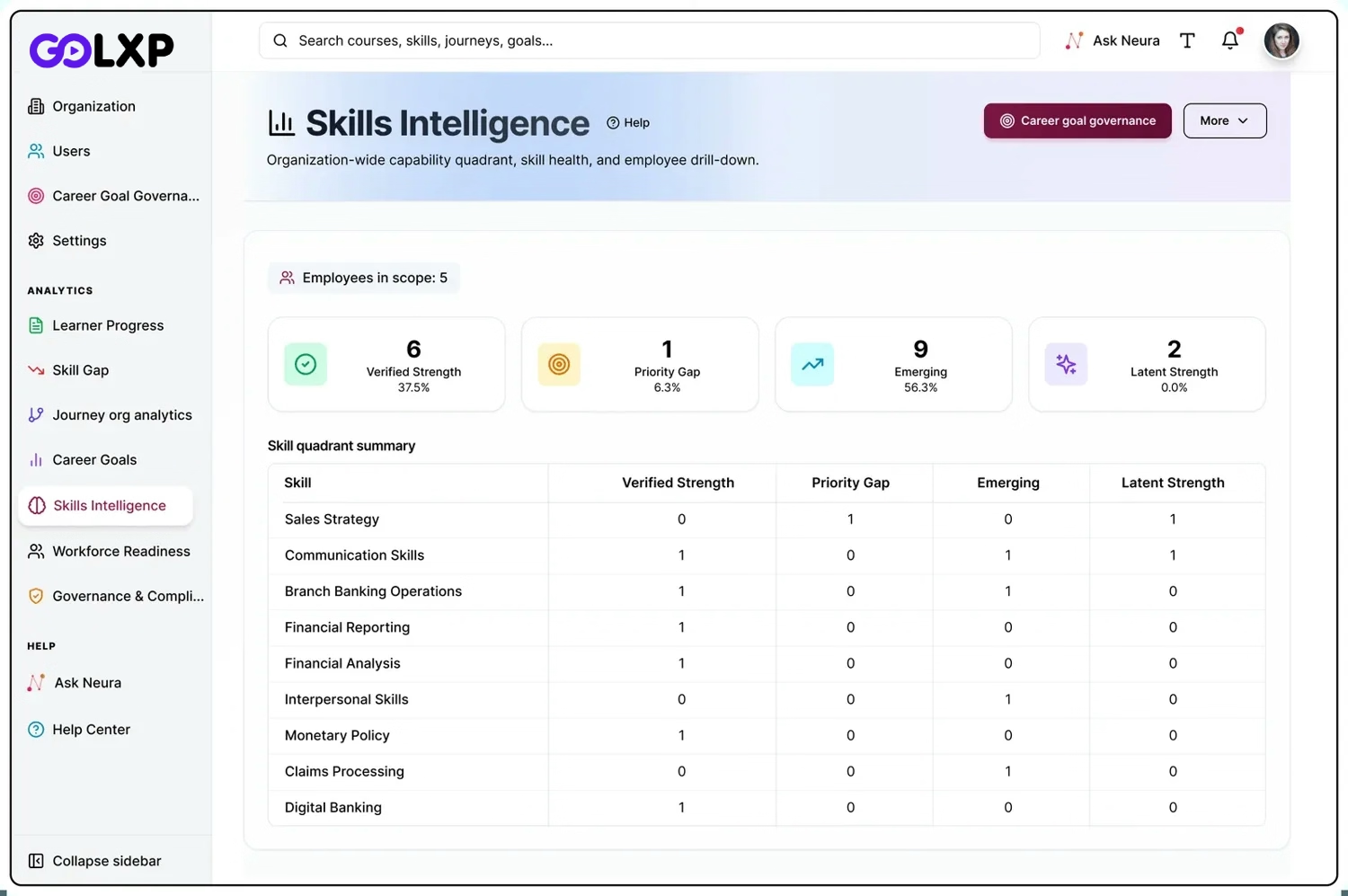
A learning ecosystem is a structure in which platform, content, data, and experience work together. When an employee wants to learn a topic, they search and find it; the system suggests the next step; their progress is recorded on a competency map; and their manager can see it.
In this structure, content still matters — but it is not enough on its own. The real difference lies in how content is positioned, who it is recommended to, and what data it produces.
Three Steps of the Transition
1. Simplify your competency framework
Don't start with complex models. Defining three to five critical competencies per role gives you a sufficient framework for the first phase. What matters is not a perfect model but a usable starting point.
2. Combine your content sources
The ready-to-use catalog, custom production, and internal knowledge should all be delivered in a single flow. What matters to the employee is not where content comes from but whether it helps them do their job.
3. Design your data from the start
Decide upfront which question you want to answer: skill gap, engagement, or time to readiness? Measurement is not a layer added later; it's part of the design.
Where to Start?
Moving to an ecosystem doesn't have to be a large transformation project. Choosing a single critical role and building the competency framework, learning path, and measurement design for it end to end is the healthiest place to start. A working example is more convincing than a ten-page strategy.
In the next phase, you extend this structure to a second and third role. An ecosystem is not built in a day; it grows one role at a time.