















LMS in Healthcare: Building an Ecosystem

In a hospital or clinic, a training record is more than an HR formality. Who completed which certification, and when? When does it expire? If an inspector walked in today, could those questions be answered in seconds? In healthcare, training is the first link in a chain that ends at the patient's bedside.
Training as patient safety
Infection control, medication administration, emergency response, equipment handling — gaps or outdated knowledge in these areas aren't an abstract risk. They reach a patient directly. That's why training in healthcare belongs in the same sentence as clinical quality, not a separate one.
That responsibility doesn't sit with one role. Nurses, doctors, lab technicians and administrative staff each need something different, and so do permanent, agency and contract staff. Across a large hospital trust, tracking those requirements by hand simply stops being practical.
It's also a legal obligation. Inspections, accreditation reviews and regulation all expect proof that staff have been trained. That proof can't live in an inbox or a manager's memory — it needs to sit in a system, timestamped and retrievable. A training record deserves the same rigour as a patient file.
Where mandatory training falls short
In most organisations, mandatory training behaves like a list that's completed once and then forgotten. In healthcare, certifications don't work that way. A nurse's basic life support certificate, a technician's device authorisation — both need renewing on a set schedule. Tracked one by one, missed dates become inevitable.
Access is the other problem. Most healthcare staff don't sit at a desk. Nurses, technicians and frontline teams working round-the-clock shifts can't log into a computer whenever training is due. If the platform doesn't reach them, the training doesn't either.
- An expired certificate: A renewal date slips past unnoticed, and the employee is effectively unauthorised without anyone realising.
- A shift worker: A nurse on a night shift can't reasonably be expected to sit down at a desktop to finish a course.
- Scattered records: Training logs kept in separate spreadsheets across departments can't be pulled together when an audit calls for them.
The cost of that gap goes beyond a flagged line in an audit report. Staff working past an expired certificate leave the organisation exposed to regulatory action. More seriously, a lapsed or missing competency can end up linked to an actual clinical incident. Treating mandatory training as a list that's ticked once and forgotten just makes that risk invisible, not smaller.
GOLMS as one ecosystem
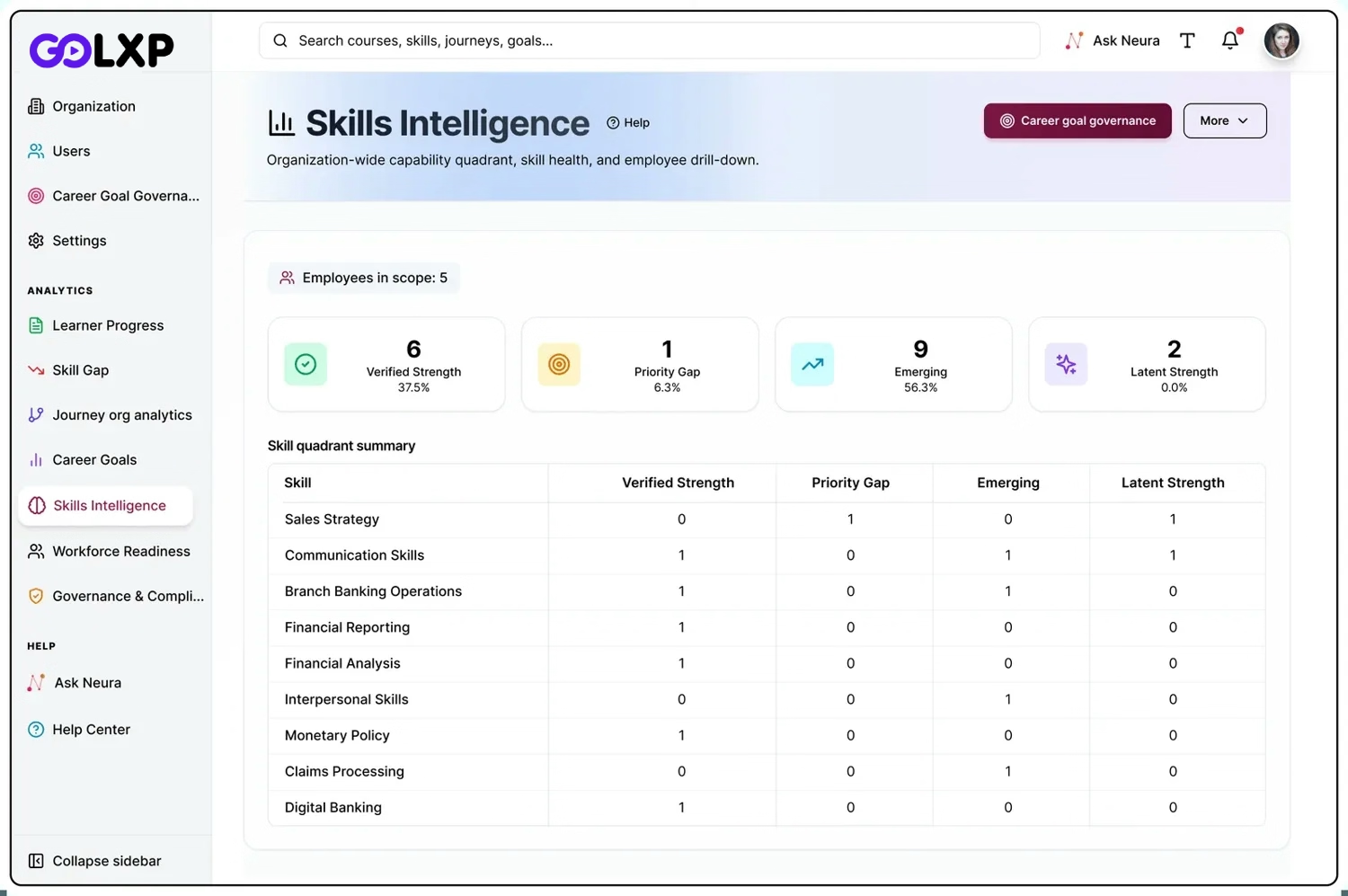
GOLMS brings that scattered picture under one roof. Certification tracking, automatic renewal reminders, audit-ready reporting and mobile access, working together, turn training records from something someone has to chase into something the system keeps moving on its own.
- Certification tracking: What each employee holds, and when they earned it, sits in a single profile.
- Automatic renewal reminders: The employee and their line manager are both notified before a certificate lapses.
- Audit-ready reporting: A completion report by department, unit or individual is one click away.
- Mobile access: Frontline and shift staff can complete training from their phone, between rounds.
None of this sits still, either. GOLMS stays in step with staff movements: a newly hired nurse is automatically assigned the certifications their role requires, a staff member moving into a new role gets flagged for any training they're missing, and someone leaving has their record archived, not erased from the audit history.
A training record deserves the same rigour as a patient file.
Any one of these four on its own still leaves gaps. Put together, what emerges isn't a list of tools. It's an ecosystem that keeps the organisation's training and compliance position visible at all times, not just on the day of an audit.
Building the ecosystem: first steps
Moving to this ecosystem happens in stages, not a single switch. The first step is mapping which role requires which certification, and how often it needs renewing. Without that inventory, automated tracking has nothing to track against.
On the content side, separate the generic from the specific. Standard topics — infection control, health and safety — can be pulled directly from the ready-made courses in GOCATALOG. Training tied to the organisation's own equipment or protocols is better built with GOFACTORY.
- Map the requirement: List which role needs which certification, and on what renewal cycle.
- Assign ownership: Decide which manager gets notified as a certificate approaches expiry.
- Match the content: Source standard topics from GOCATALOG, and build organisation-specific protocols with GOFACTORY.
- Rehearse the audit: Run through the reporting process once before a real inspection asks for it.
One department at a time
Trying to move the whole organisation at once makes change harder than it needs to be. Starting with a single department, or a single certification group, gives staff and the system room to settle in, and naming someone to own that rollout speeds up every department that follows.
In healthcare, training isn't finished the moment a module is marked complete. It's the ability to answer, at any moment, who holds which competency, when it needs renewing, and where the evidence sits. GOLMS doesn't just answer those questions one at a time — it builds a system that keeps answering them.