
















How to Make Mandatory Training Less Boring
Mandatory training follows the same pattern in most organisations: a long slide deck, a multiple-choice quiz, then a certificate. Employees click through to finish, not to learn. The compliance box gets ticked. Behaviour doesn't change.
That's a loss on both sides. Employees spend time without retaining anything. The organisation can show training was delivered, but has no real signal on whether people would act correctly in an actual incident.
Why click-through learning fails
Data protection, health and safety, ethics — these modules usually open with dense, text-heavy slides. Employees want to get through them, not absorb them. As content drags on, attention drops, and a passed quiz stops meaning anything was actually learned.
This isn't only a motivation problem. Long, abstract explanations don't connect to real moments at work. When employees can't see when they'd actually need this, the content stops meaning anything to them. It becomes an obstacle to clear, not a lesson to keep.
Take a typical data protection induction module: twenty slides of bullet points, then a ten-question test. Employees guess their way through the quiz and pass. Three months later, the same employee might reply to a customer request through the wrong channel. The format delivered information. It didn't change behaviour.
The power of scenario-based content
Presenting a real decision, rather than a list of rules, holds attention. The employee doesn't just read information — they make a choice inside a situation. That choice shows exactly why the rule exists, turning a fact to memorise into something they've actually done.
Why it works
The brain remembers a concrete moment better than an abstract rule. Once the scenario ends, what stays with the employee is the decision they made, not the wording of the policy. That decision template is far more likely to get applied the next time a real situation looks similar.
- A real scenario: A file with customer data is left on a desk. What does the employee do next?
- Immediate feedback: A wrong choice gets a short explanation of the consequence, not a penalty.
- Short dialogue: Conversational pacing instead of dense paragraphs.
- Recurring characters: The same characters reappearing across modules build context that sticks.
This matters most in grey areas — ethics, conflicts of interest, judgement calls where the rule alone isn't enough. A scenario shows the employee how to reason through the grey area, not just what the black-and-white answer is.
Shortening into micro-modules
Instead of one 45-minute session, five-to-eight-minute pieces raise both completion rates and recall. Employees can finish a module between meetings, or on a break. A long format fights a short attention span; the micro-module removes that conflict altogether.
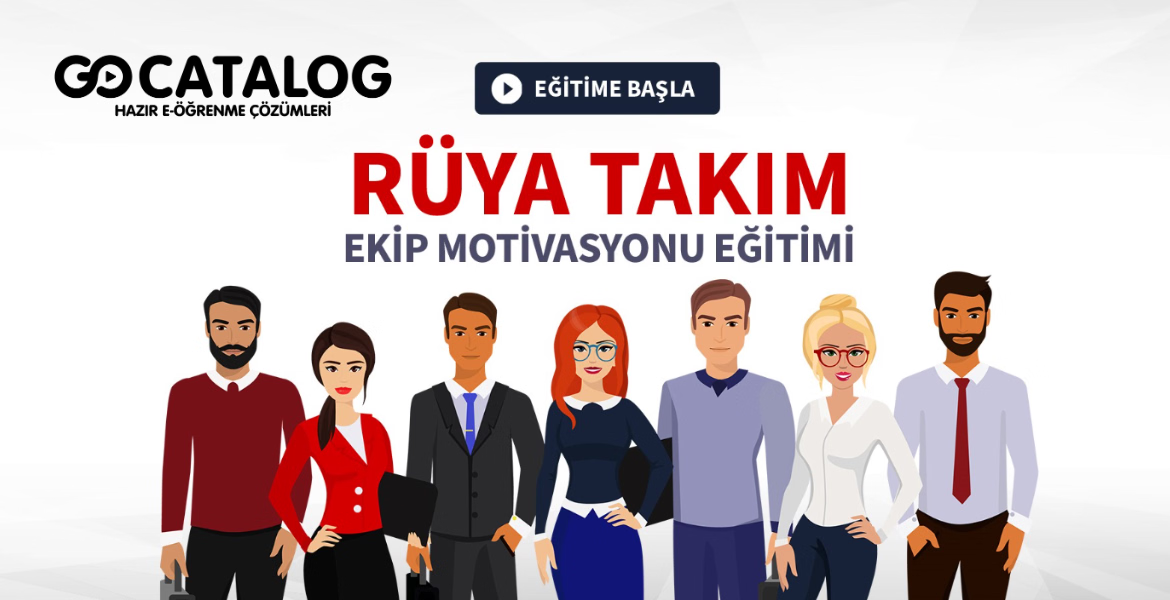
The ready-made compliance content in GOCATALOG is built exactly this way. Data protection, health and safety, ethics — each topic arrives as short, scenario-based modules. There's no need to build content from scratch; the team can start assigning straight away.
Short modules also make manager oversight easier. Seeing where an employee stands across five small steps is far clearer than tracking progress through one 45-minute block. Outstanding modules show up as a simple list, and reminders go out automatically.
- Split by topic: Each module focuses on a single rule, not an entire policy.
- Access from any device: Short formats that finish on mobile keep participation up.
- Content stays current: When regulation changes, only the affected module needs updating, not the whole course.
Keeping the audit trail intact
A shorter format doesn't mean a thinner audit trail. The real risk in mandatory training isn't that the content is dull — it's not being able to prove an employee completed it.
What changes is the format, not what happens on the system side. Start and finish times, right and wrong answers, retry attempts — all of it stays logged. What an auditor sees is exactly as detailed as it was with the long-form course.
Shorter content doesn't mean weaker records.
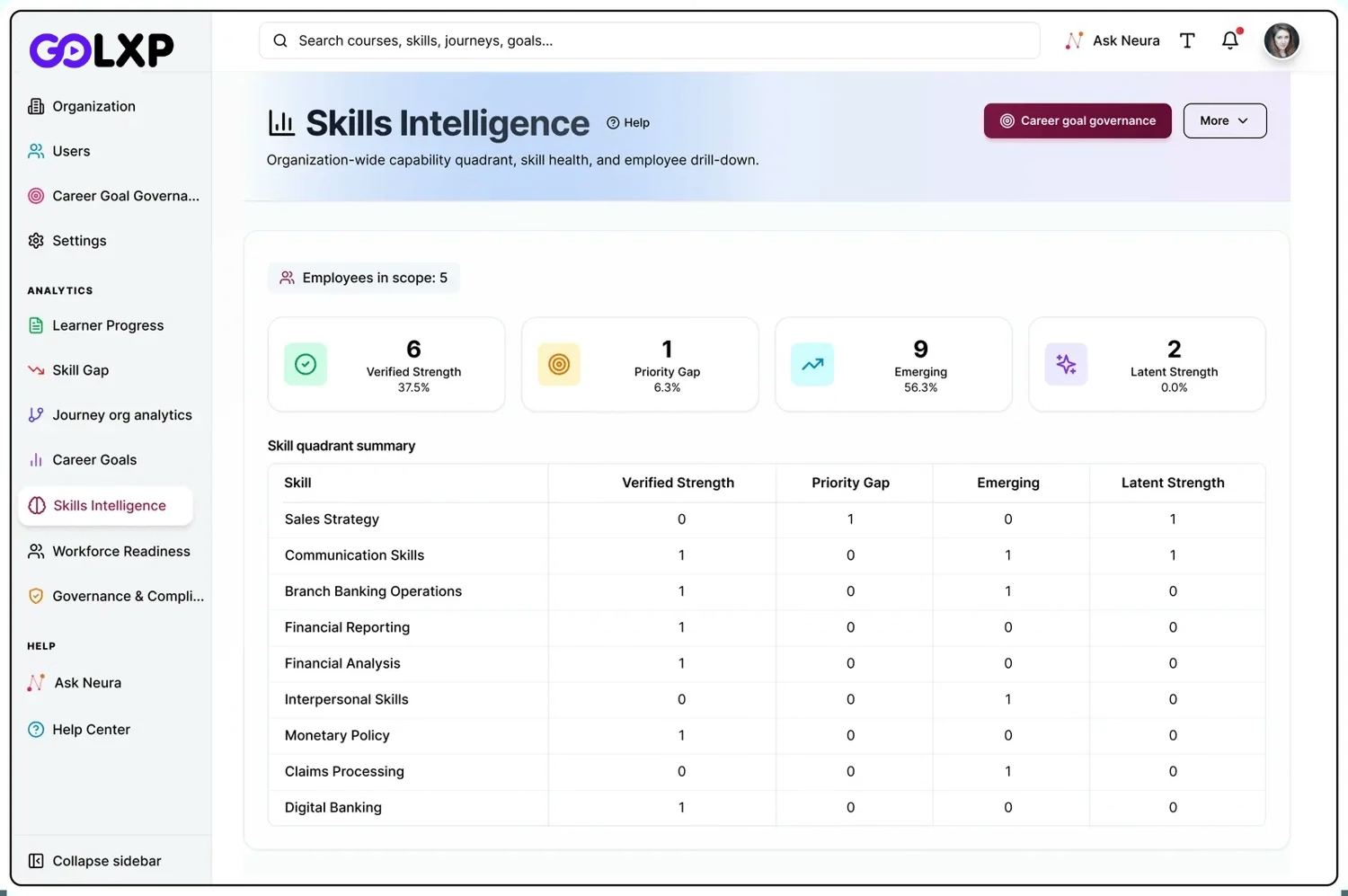
- Completion logging: Every micro-module's completion time and result is logged automatically in GOLMS.
- Version tracking: You can see which content version each employee completed, even retrospectively.
- Reporting on demand: A completion report by department or individual is one click away when an audit calls for it.
This structure also pays off when regulation changes. Updating and reassigning a single micro-module is far faster than redesigning an entire course. The compliance team can get updated guidance in front of employees within days.
Making mandatory training less boring isn't about softening the rule. It's about changing how it's told. Short, scenario-based and fully traceable — that structure respects the employee's time and the organisation's compliance obligations at the same time.
None of this requires a major transformation project. The right content structure and the right platform are enough to start. The ready-made scenarios in GOCATALOG speed up the first step, and GOLMS keeps the whole process traceable.