
















What 30-Day Onboarding Programs Do Differently
The first 30 days set the tone for everything that follows. Yet in most organisations, onboarding still looks the same: a folder of PDFs, one intensive induction week, then silence. By the time the new starter reaches their second month, nobody's checking what they actually learned, or what they still need to. Companies that genuinely build out the first 30 days do something different. They treat onboarding as a system, not a one-off event.
The cost of scattered onboarding
Traditional onboarding tends to fail in one of two ways. Either too much information is crammed into a single week, or the information is scattered and nobody knows where to start. Either way, the new starter pays the price in confusion and lost time. On the HR side, the cost is less visible but just as real: the same process gets rebuilt by hand for every hire, the same emails go out again, the same questions get answered again.
- One-off overload: dozens of courses are stacked into week one, and most of them are forgotten by the time the new starter is actually doing the job.
- Scattered resources: materials are split across email attachments, shared drives and internal wiki pages, and the new starter can't even tell which version is current.
- No visibility: HR cannot see, in real time, who has completed what and who has fallen behind — the gap only surfaces once performance dips.
- Disconnected managers: the manager has no view of what their new hire has actually covered, so support during the first month ends up ad hoc and inconsistent.
Building the 30-day framework
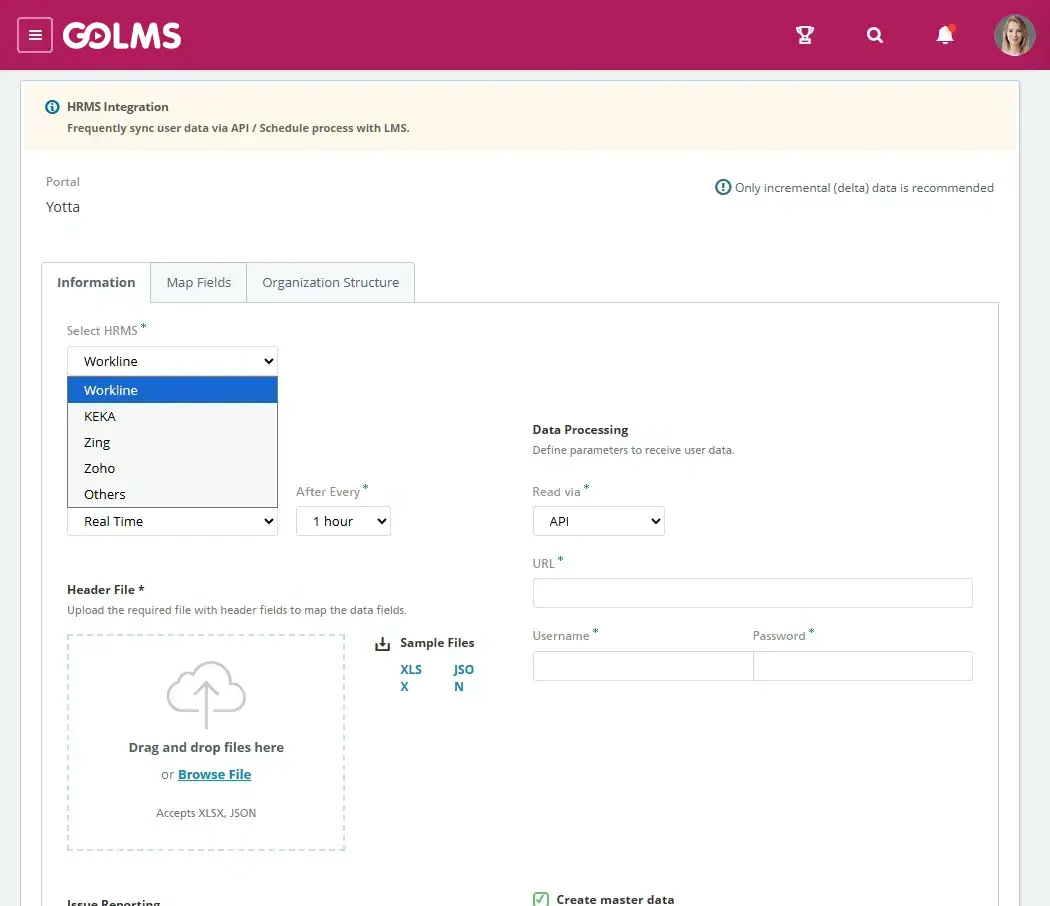
Companies that genuinely build out the first 30 days turn onboarding from a pile of documents into a defined, day-based assignment flow in GOLMS. From day one, every new starter is automatically enrolled in a learning path defined for their role and department. That shifts onboarding from something HR has to think through for each individual hire into a system that's set up once and runs on its own.
The power of this approach is automation. HR no longer assigns training manually for each new hire. GOLMS's rule engine uses the start date as a trigger, releasing content in sequence against a predefined day-based schedule. Once the framework is set up, it runs itself for every new starter after that — HR steps in only for the exceptions.
The second part of the framework is where the content comes from. General compliance training can be built in-house, while role- or sector-specific material is pulled from GOCATALOG's ready-made library. Anything genuinely specific to the company, product or process gets built with GOFACTORY and slotted into the same flow. The new starter ends up learning everything in one place, on one path.
The day-by-day assignment flow
Day 1: Mandatory compliance training
Day one is non-negotiable. Health and safety, information security and company policy training are assigned automatically through GOLMS, and the new starter can't move on to the next stage until they're complete. Nobody enters week two having skipped a compliance requirement. It also leaves a clear, auditable record: who completed what, and when, is always answerable.
Week 2: Role-based content
Week two is where general onboarding gives way to role-specific content. Someone joining sales and someone joining engineering no longer follow the same path. GOLMS releases the relevant material, whether that's from GOCATALOG's ready-made library or bespoke training built with GOFACTORY, matched to the new starter's role. From this point on, they're learning what actually helps them do their job, not a generic induction narrative.
Week 4: Completion reports and manager check-ins
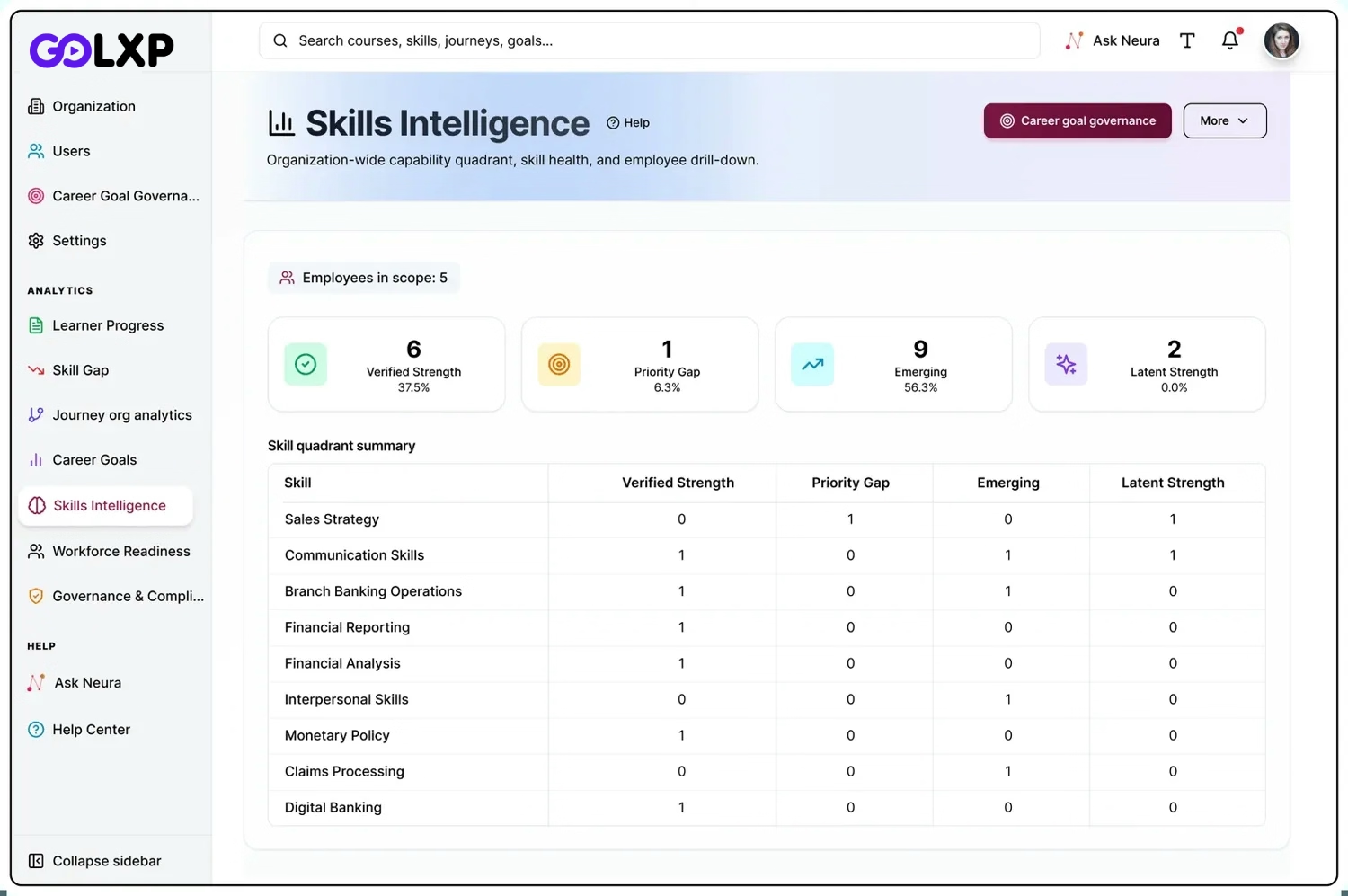
Week four is the system's most important step. GOLMS generates an automatic completion report: what the new starter has finished, what's overdue, and where they might need more support. That report goes straight to their manager and triggers a check-in conversation. The manager walks in with data, not guesswork, and the conversation moves past a generic "how's it going" into what the new starter actually needs.
Onboarding that's measurable and repeatable
The real advantage of a day-based flow is consistency. The same system works just as well for the tenth hire as it does for the hundredth. HR isn't rebuilding the plan from scratch every time, so effort shifts from running the process to improving it.
Onboarding isn't a set of documents. It's a matter of timing.
Reporting inside GOLMS turns onboarding from a one-off project into a process you can keep improving. Where new starters get stuck, and which week completion rates drop off, becomes visible. That data lets the framework be adjusted every quarter, and lets different completion patterns by department be spotted and shared with the relevant manager.
A 30-day onboarding programme isn't a welcome week. It's a system that covers the whole first month. Once it's properly built, the new starter, their manager and HR are all working from the same calendar. Nobody has to guess what training is coming next — the system already knows.