

















Personalized Learning Paths in 2026
When a company opens its training catalogue to everyone in the same way, the outcome is usually the same: low completion, early drop-off, and a rising sense of compliance fatigue. A salesperson, a developer and a new starter all see the same list. The content itself might be excellent. The problem isn't quality — it's relevance and timing. Personalised learning paths change that picture, but only when they're built on real data.
Why one-size-fits-all catalogues fail
A single catalogue fails in three places: role, level and timing. Each one lands the same way — the learner decides the content isn't for them, puts it off, and eventually stops opening it at all.
- Role mismatch: a finance specialist has no use for sales technique modules, and a developer rarely needs customer service scripts.
- Level mismatch: a new starter gets lost in advanced material; an experienced employee is bored by the basics.
- Timing mismatch: training assigned on an annual schedule, rather than when the need actually arises, is forgotten before it solves anything.
The cost isn't just a low completion rate. L&D teams spend budget on content nobody uses. Managers can't be sure training is actually doing its job. And employees complete courses to tick a box, not to learn.
Personalisation versus random suggestions
Personalisation doesn't mean letting an algorithm suggest something. Random suggestions can look like personalisation without being built on any real data, and they rarely match what an employee actually needs. Smart personalisation comes from combining three layers of data.
Three ingredients of a smart recommendation
- Skill profile: the employee's current competency level, completed courses, and any assessment results on record.
- Interest: the goals the employee has set themselves, their career direction, and the content they choose to open voluntarily.
- Progress data: what they've finished, where they slow down, and which topics they come back to.
Random suggestions tend to repeat whatever a person clicked last, which narrows their path rather than opening it up. Smart personalisation balances past behaviour against the distance to a target role — it accounts for where someone needs to go, not just what they're currently drawn to.
Personalisation means showing the learner the right content at the right moment — nothing missing, nothing wasted.
How GOLXP builds personalisation
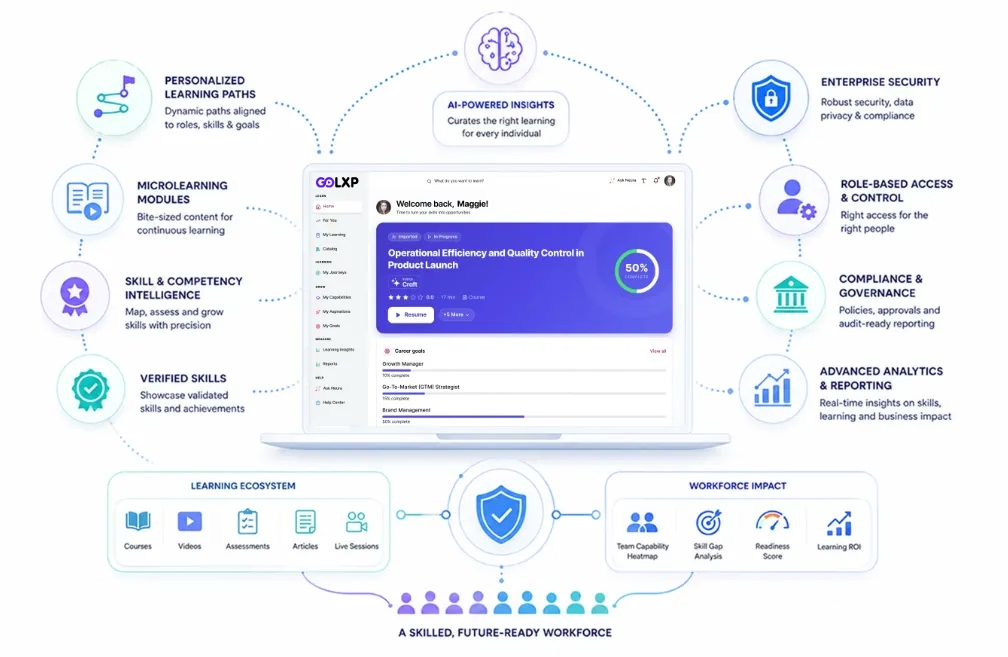
GOLXP reads all three data layers together to build a learning path. It matches role and goal data against the skill profile, and keeps it current with progress data. The result is a recommendation list that's specific to the employee and changes over time — not a static plan set once and forgotten.
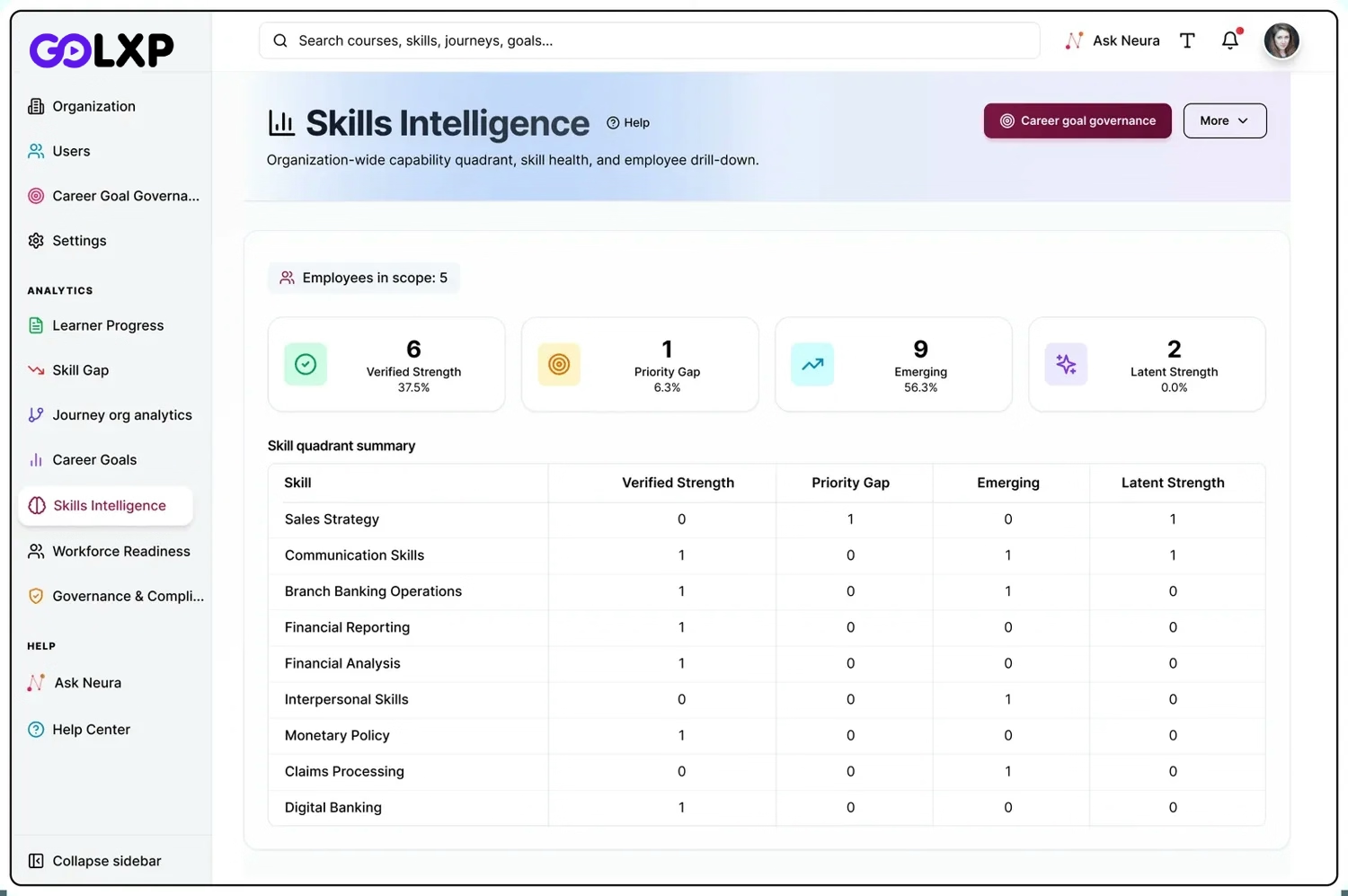
- Skill-gap analysis: shows the distance between an employee's current profile and their target role, and ranks recommendations by how much they close that gap.
- Adaptive pathing: the path moves faster when an employee completes content quickly, and brings in extra support material when they struggle.
- Manager visibility: team leads can see how personalised paths line up with team goals, and step in where needed.
This isn't a one-off assignment. As an employee finishes content, an assessment result comes in, or a goal changes, the path recalculates. Instead of a static list, employees get a guide that keeps updating itself.
The same engine connects GOCATALOG's ready-made content library and the bespoke content GOFACTORY produces. Employees see one path, built for them, in one place.
The real impact on engagement
An employee who sees a relevant recommendation doesn't need to scroll through the whole catalogue. What they're looking for is already in front of them. That's a simple but powerful mechanism for engagement: less friction, more relevance.
Retention follows the same logic. Every time an employee runs into content that feels irrelevant, they trust the platform a little less, and skip the next invitation. A personalised path reverses that: when the platform keeps showing something useful, people come back.
- Start small: pilot a personalised path with one role or team, and measure what happens before rolling it out further.
- Feed the data: the more current the skill profile and progress data, the sharper the recommendations.
- Drop the static calendar: replace the annual training plan with a path that updates as needs change.
Personalised learning paths aren't a shortcut. Built on real data, they're an approach that genuinely shifts engagement and retention. GOLXP puts that approach to work using the data an organisation already has.